Sub-Teams
You can create teams within teams to match how your company is organized. For example, an "Engineering" team can have "Frontend" and "Backend" as sub-teams.
Sub-teams can be nested up to 4 levels deep.
Engineering
├── Frontend
│   └── Design System
│       └── Icons              ← maximum depth
└── Backend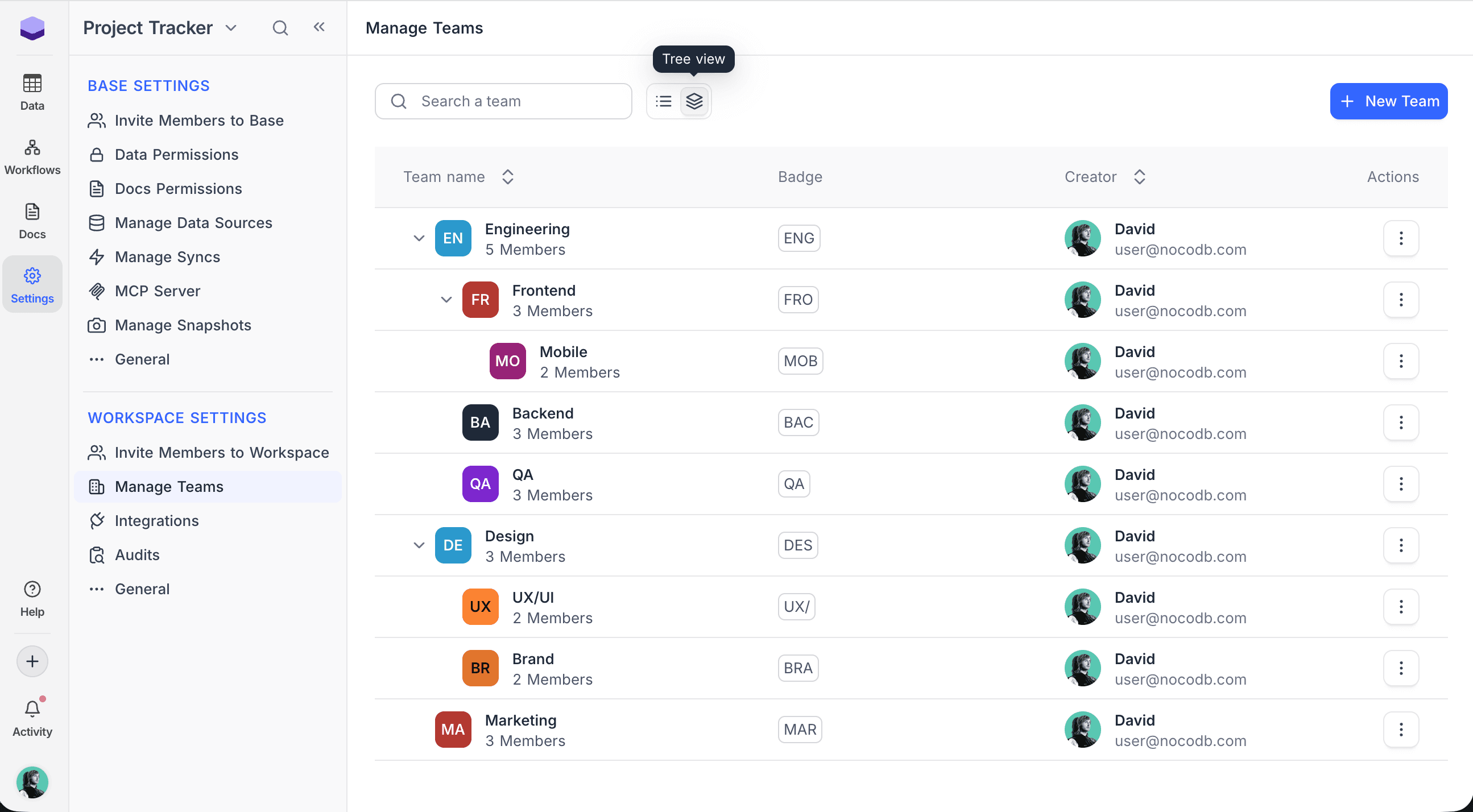
Create a sub-team
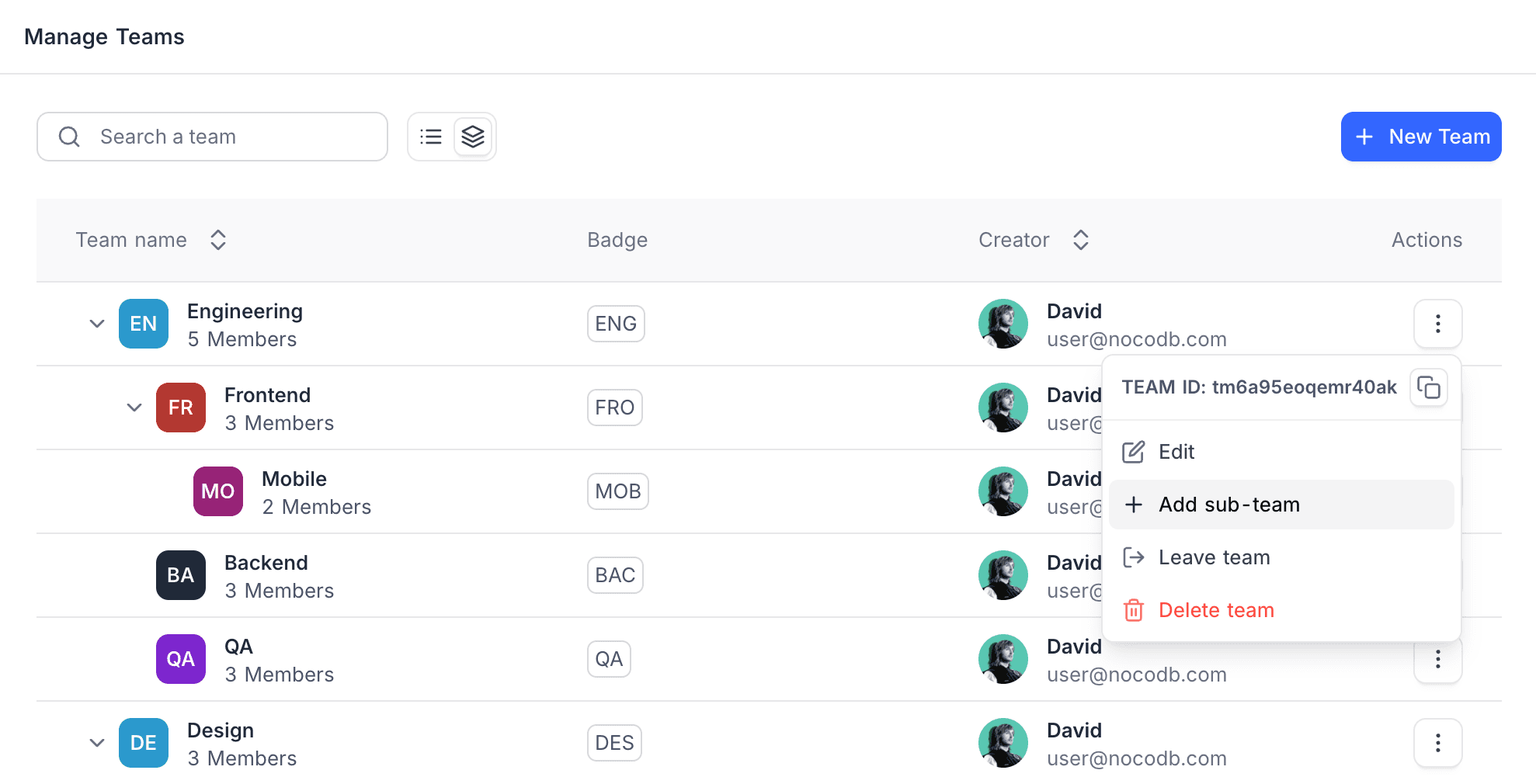
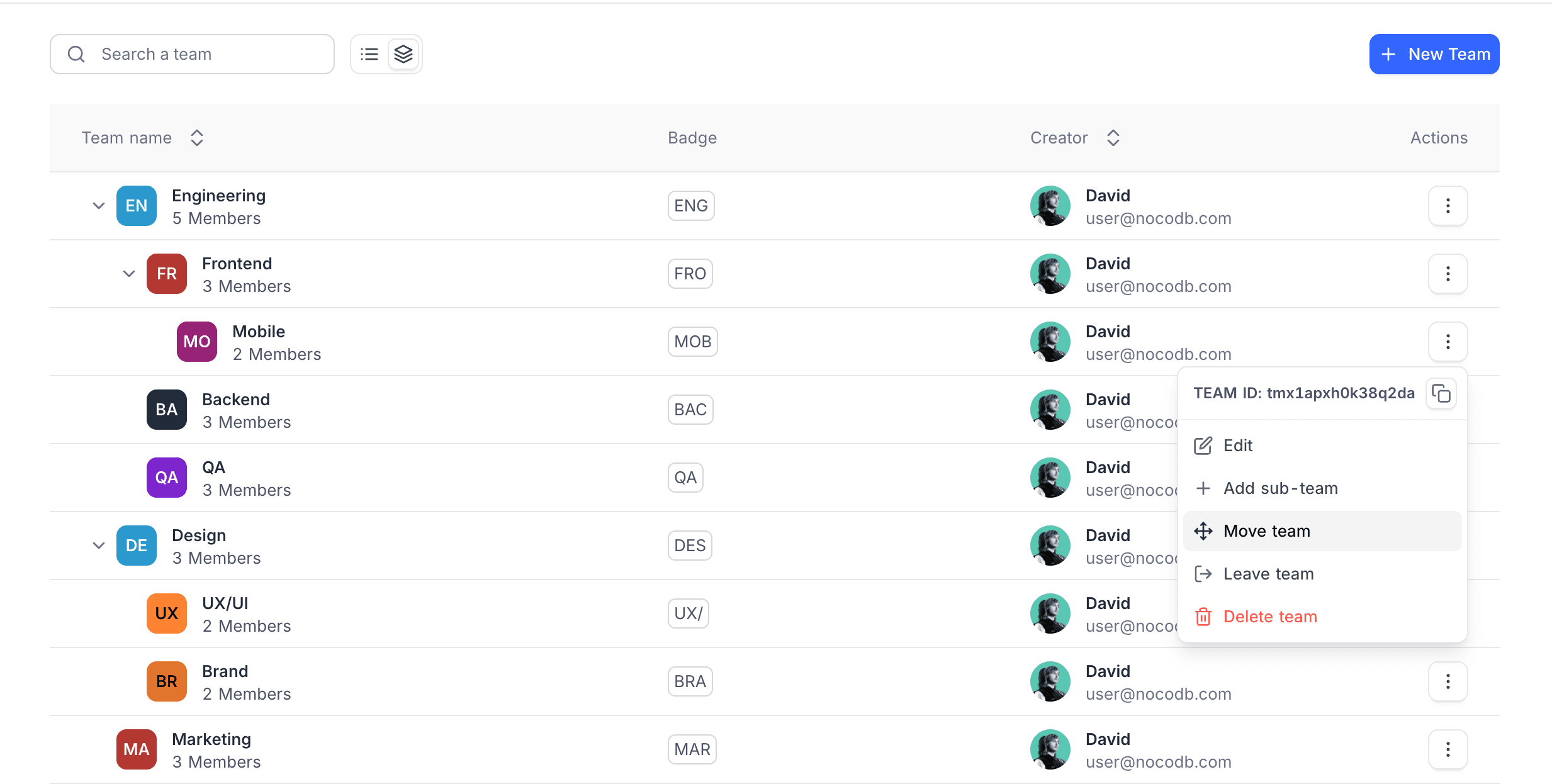
- On the Teams page, click the Actions (three dots) menu next to the parent team.
- Select Create Sub-team.
- Enter a name for the sub-team.
- Click Create Team.
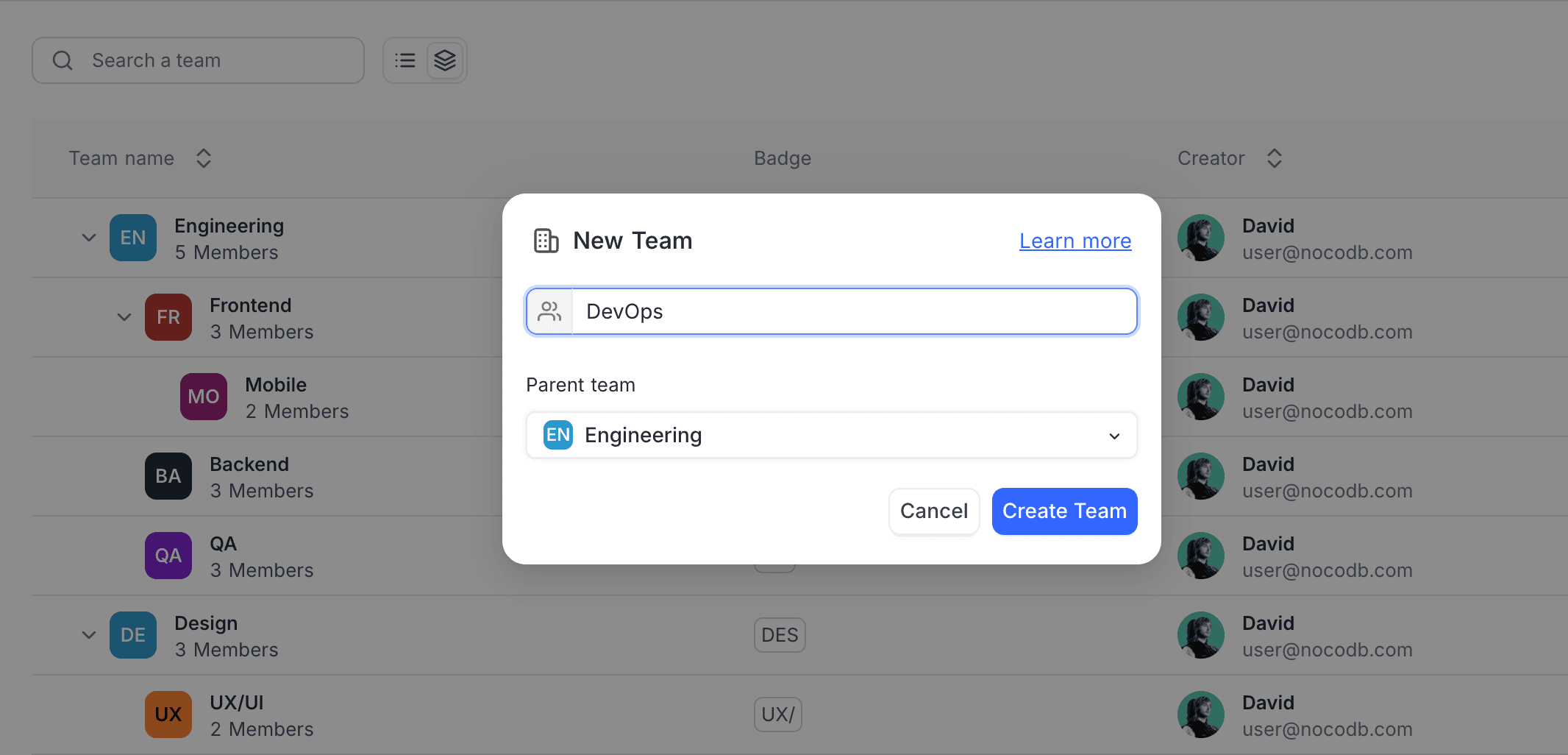
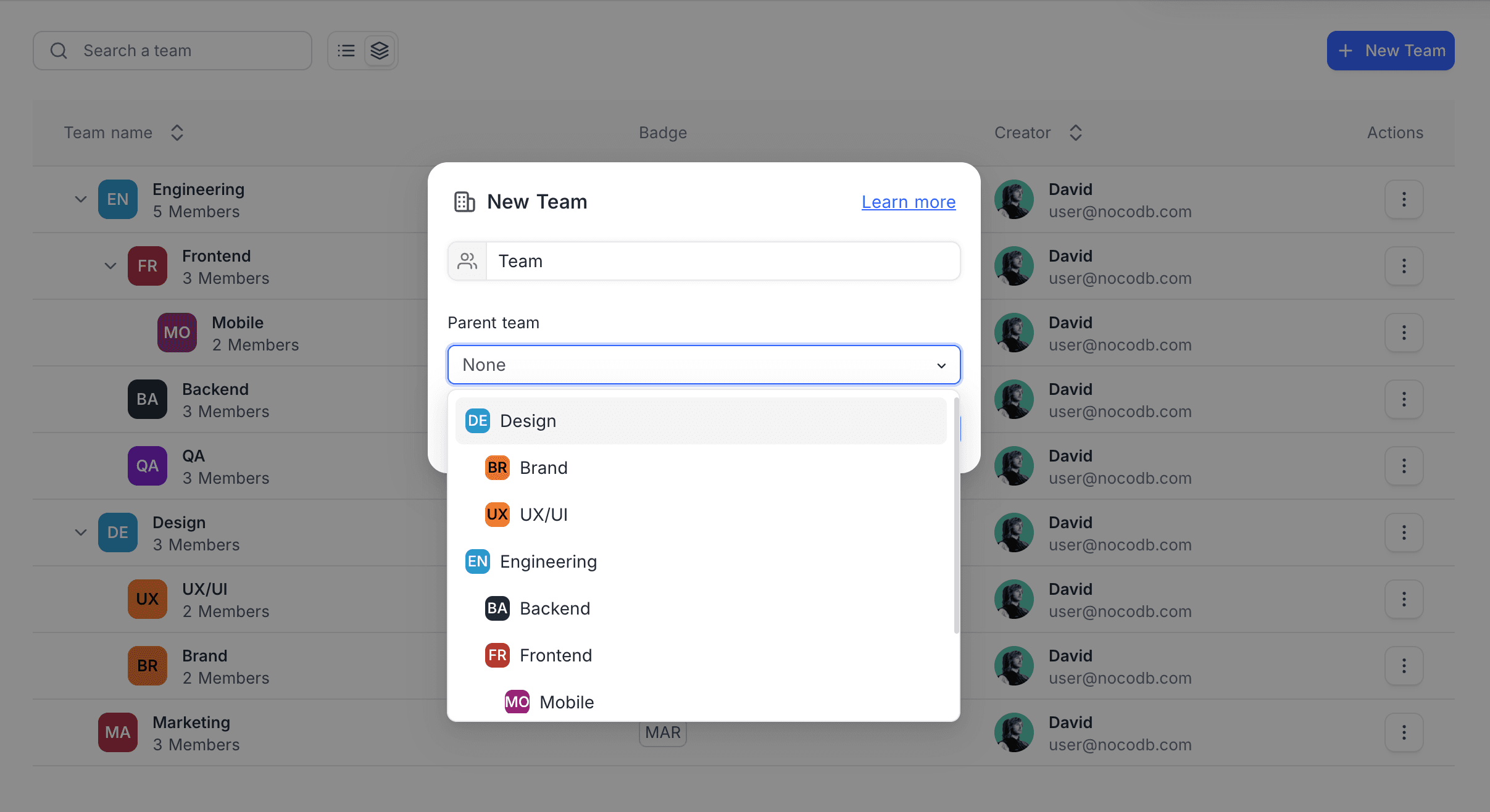
Alternatively, click New Team and select a parent team from the Parent team dropdown. Enter a name for the team and click Create Team.
Move a team
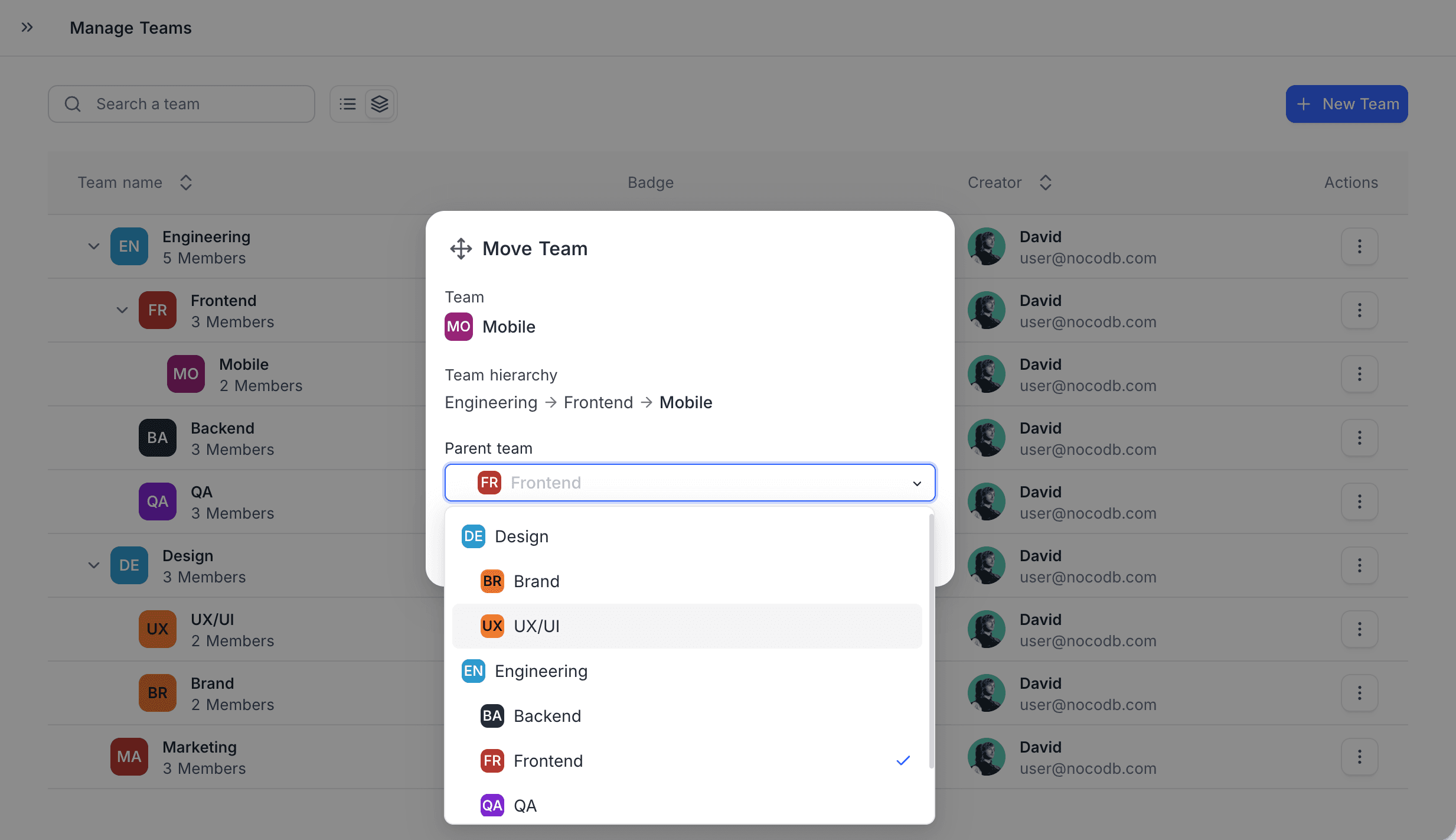
You can move a team under a different parent, or make it a top-level team.
- On the Teams page, click the Actions (three dots) menu next to the team.
- Select Move Team.
- Pick the new parent team, or choose no parent to make it top-level.
- Confirm the move.
Members in sub-teams
Adding someone to a parent team does not automatically add them to its sub-teams. You manage each team's members separately.
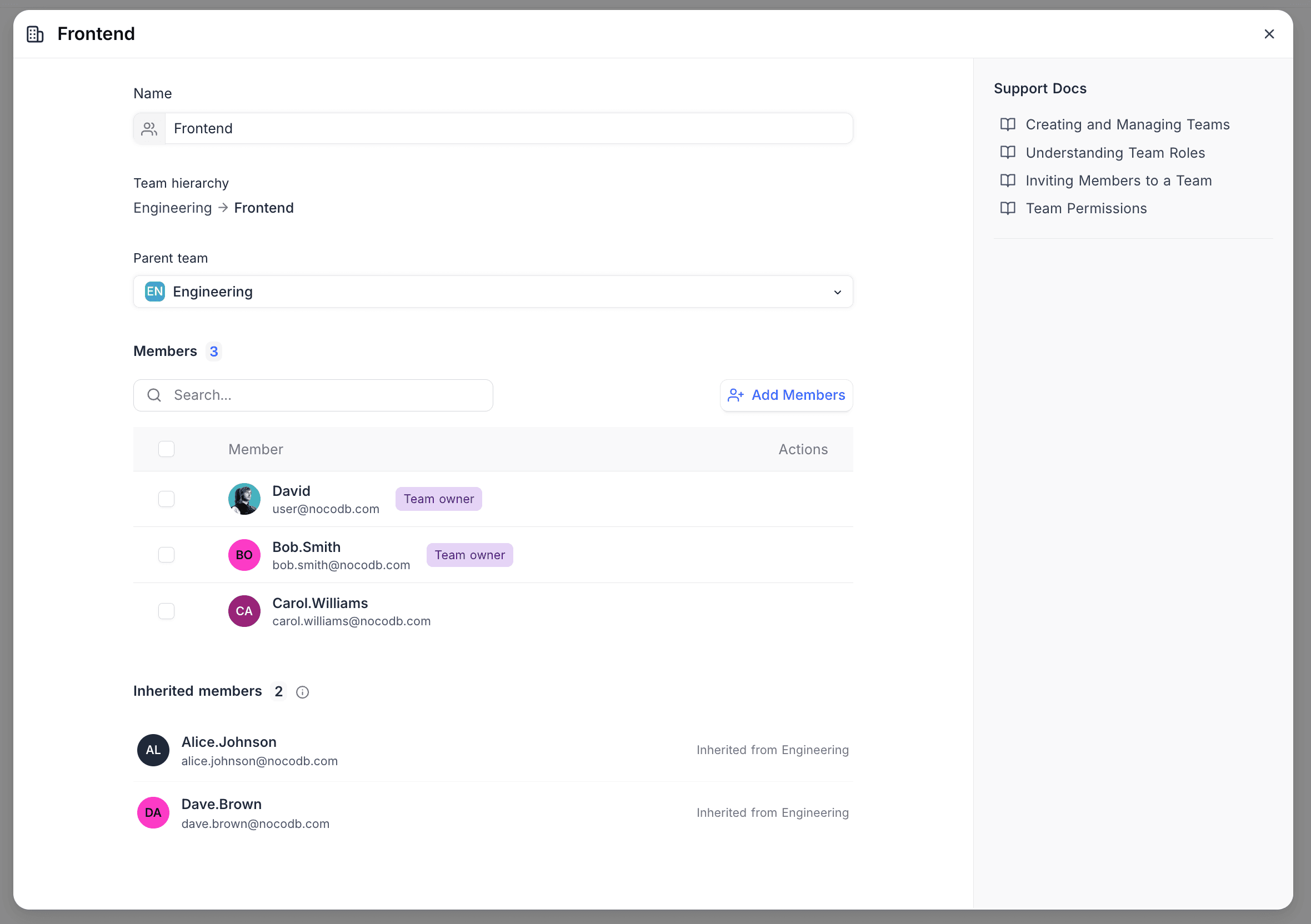
When you open a team's details, you'll see:
- Direct members — people you added to this team
- Inherited members — people from parent teams above, shown for reference with a label indicating which team they belong to
How sub-teams affect permissions
| What | Direction | How it works |
|---|---|---|
| Workspace & base roles | Upward | Parent team members automatically get their sub-team's roles |
| Table, record & field permissions | Downward | Sub-team members are included by default; you can switch to "This team only" |
Sub-teams change how permissions work in two ways:
1. Workspace & base roles flow upward
When you give a sub-team a role on a workspace or base, members of the parent team also get that role automatically. This way, managers in the parent team can always see what their sub-teams have access to.
Example: The "Frontend" sub-team has Editor access to Workspace X.
| Person | Team | Access to Workspace X |
|---|---|---|
| Alice | Frontend | Editor |
| Bob | Engineering (parent of Frontend) | Editor — gets it automatically |
| Carol | Backend (sibling, not parent) | No access |
2. Table, record & field permissions flow downward
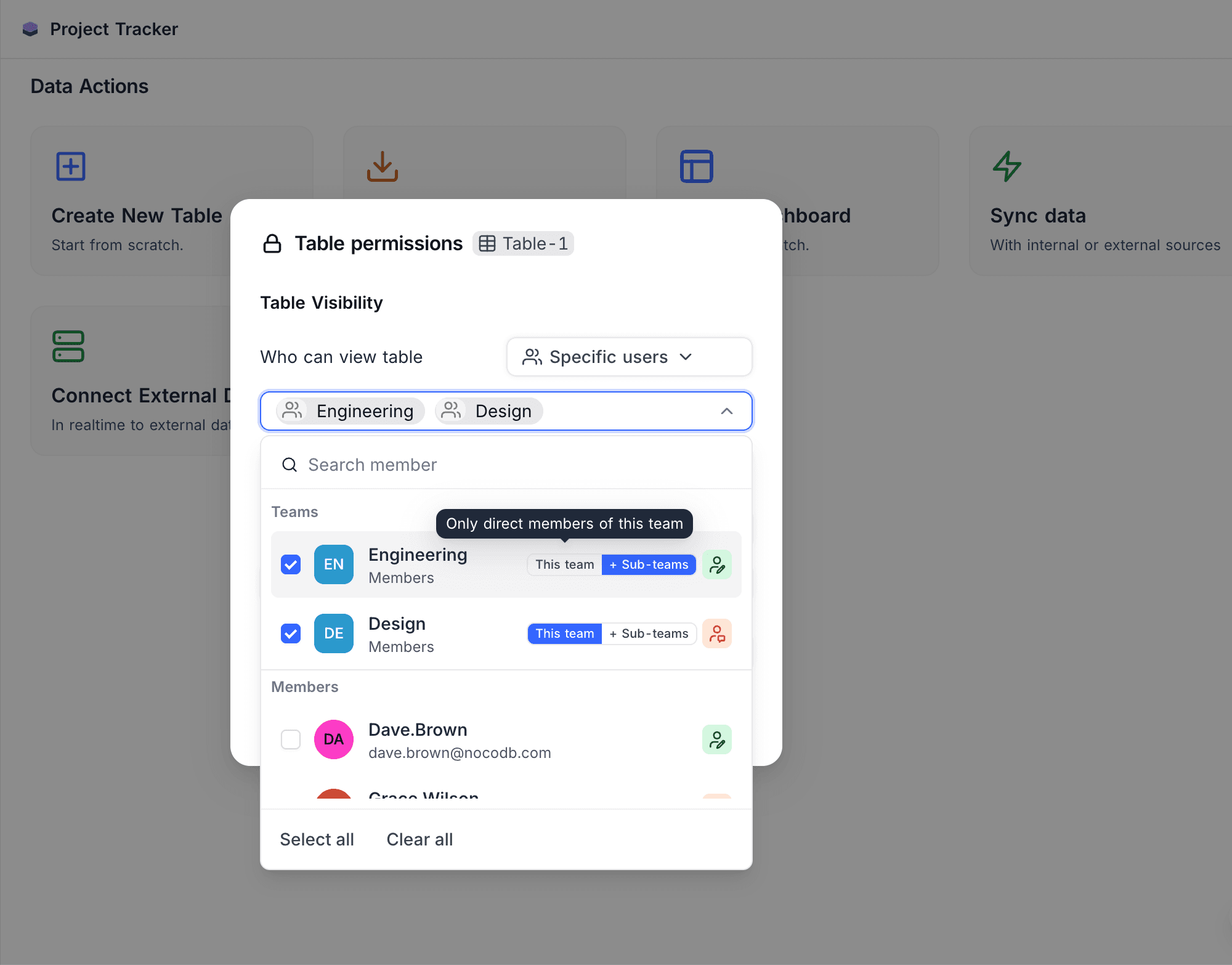
When you grant a team access using "Specific users or teams" in table visibility, record permissions, or field permissions, you can choose whether to include sub-team members or not.
After selecting a team, you'll see a segmented control next to the team name with two options:
| Option | Who gets access |
|---|---|
| This team | Only direct members of this team |
| + Sub-teams (default) | Members of this team and all sub-teams below it |
Example: The "Infrastructure" table is visible to the "Engineering" team.
With "Include sub-teams" (default):
| Person | Team | Can see "Infrastructure"? |
|---|---|---|
| Alice | Engineering | Yes |
| Bob | Frontend (sub-team) | Yes |
| Carol | Design System (sub-sub-team) | Yes |
| Dave | Marketing | No |
With "This team only":
| Person | Team | Can see "Infrastructure"? |
|---|---|---|
| Alice | Engineering | Yes |
| Bob | Frontend (sub-team) | No |
| Carol | Design System (sub-sub-team) | No |
This toggle is available wherever you see the "Specific users or teams" option:
- Table visibility — who can see a table
- Record permissions — who can create or delete records
- Field permissions — who can edit a field
Last updated on